
Protect your photos by scheduling core time blocks: 20 to 60 minutes for couple portraits, 20 to 45 minutes for family formals, and 20 to 30 minutes for the wedding party, plus buffers between each. Choose a first look if you want a relaxed cocktail hour and more portrait time in daylight; skip it if you want the traditional aisle reveal and don't mind a tighter photo window after the ceremony. Copy a sample timeline below and adjust it to your ceremony start time.
TL;DR:
- A detailed wedding photography timeline can save crucial moments like vows and reactions by allocating specific time blocks for each session.
- Allow 30 to 90 minutes for getting-ready shots, 20 to 60 minutes for couple portraits, and 20 to 45 minutes for family formals, depending on the size of the group.
- Build your schedule around the ceremony time, including buffers for transitions and unexpected delays, applying the 15% Rule for travel time.
- When delays occur, prioritize essential shots and consider shortening or skipping less important portrait sessions to stay on schedule.
- Sharing a clear, well-planned timeline with your vendors ensures everyone works in sync and helps your photographer capture every critical moment.
Table of Contents
- Why Your Wedding Photography Timeline Matters More Than You Think
- How Long Should Each Wedding Photo Block Actually Take?
- Sample Wedding Day Photo Timelines You Can Copy
- How Do You Build a Timeline That Fits Your Actual Wedding?
- What Do You Do When the Timeline Falls Apart?
- Why Treating Your Timeline as a Creative Tool Changes Everything
- Ready to Put Your Timeline in Someone Else's Hands?
- Sources
- FAQ
Why Your Wedding Photography Timeline Matters More Than You Think
A rushed schedule doesn't just stress you out. It costs you photos you can never reshoot. Vows, the first kiss, your grandmother's reaction in the front row, the exact color of the sky during golden hour. None of that happens twice.
A written timeline solves this by locking your ceremony time first and building every other block around it, then sharing that schedule with your planner, caterer, and DJ so nobody double-books your window. This single habit is what separates couples who get their dream shots from couples who spend their reception wondering why the photographer never got that shot of them dancing with dad.
A few things a solid timeline protects that couples rarely think about ahead of time:
- The 60 to 90 minutes photographers usually want during getting-ready, since that's when final dress details and candid nerves happen
- Coverage hours themselves, since an 6-hour package forces harder trade-offs than an 8 or 10-hour one
- Transition windows between venues, which eat more time than couples ever expect
How Long Should Each Wedding Photo Block Actually Take?
Every photographer has their own style, but the ranges below show up again and again across real wedding day schedules, and they're a safe starting point for your own draft.
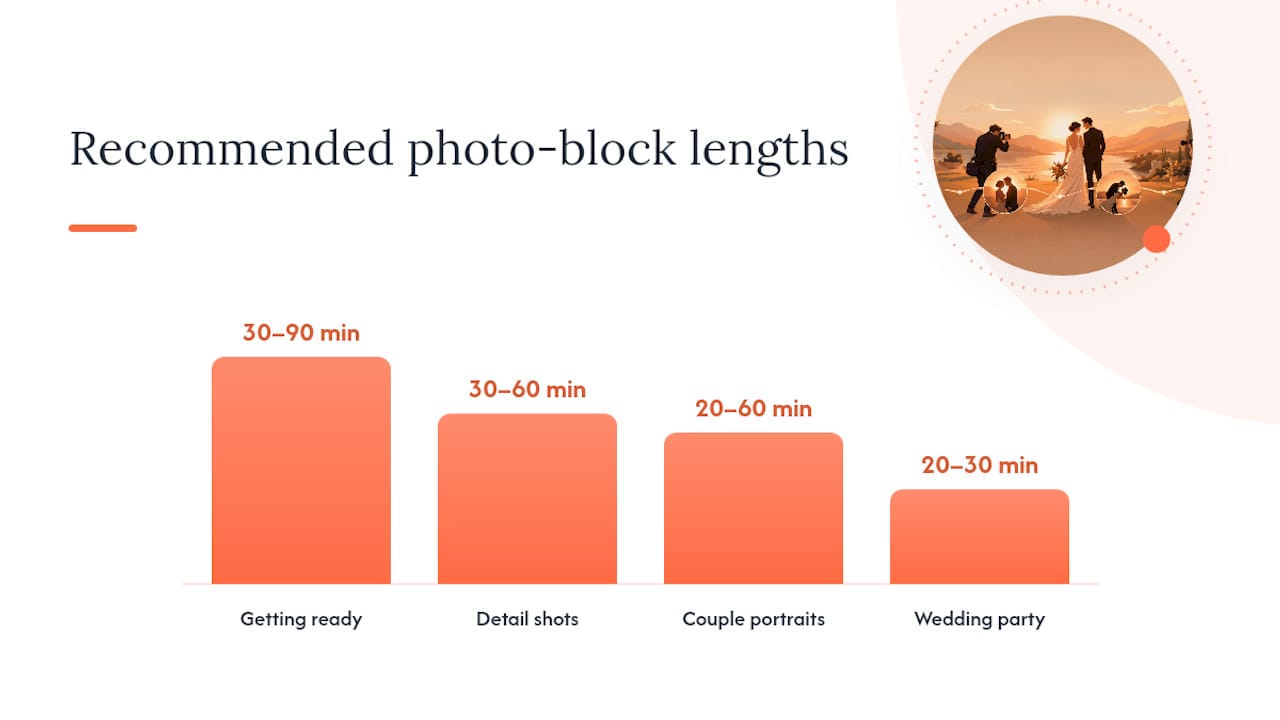
Getting ready: Budget 30 to 90 minutes of coverage, with photographers often needing a focused 30 to 60 minutes just for detail shots (the dress, rings, invitation suite) and last looks before anyone walks out the door.
Couple portraits: Plan 20 to 60 minutes total, and you can split this into two sessions instead of one. Many couples do a shorter session right after a first look and a second, shorter one during golden hour.
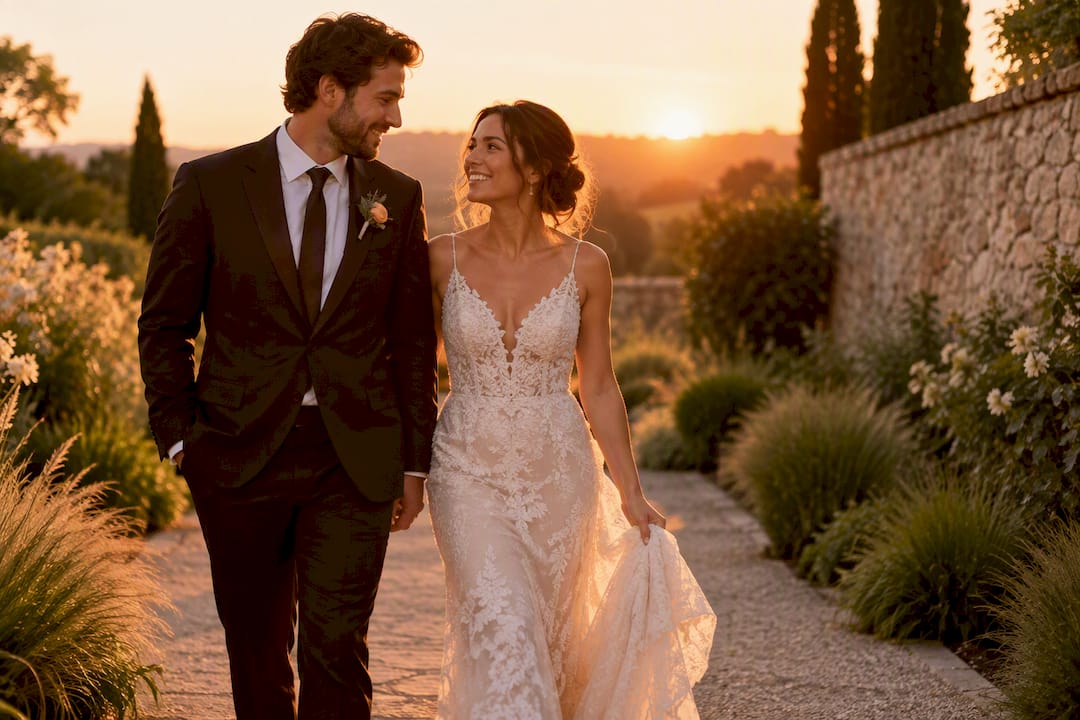
Wedding party: Give this 20 to 30 minutes. A second shooter working alongside your lead photographer can trim that down further by photographing bridesmaids and groomsmen separately at the same time.
Family formals: Set aside 20 to 45 minutes depending on how many groupings you need. Wedding photographers commonly recommend 30 minutes for family portraits when the list stays to close relatives, and that number climbs fast once you add extended family and blended-family combinations.
Ceremony: Schedule the actual ceremony length, then tack on a 10 to 15 minute buffer immediately after for quick group shots or candid reactions while everyone is still in one place.
The 3-minute rule: Most photographers plan roughly three minutes per family grouping. Twelve groups on your list means 36 minutes minimum, before anyone gets distracted or wanders off to find a missing uncle.
Photographers commonly recommend 30 minutes for wedding party portraits and 45 to 60 minutes for couple portraits when a first look lets you knock most of these out before the ceremony even starts.
Sample Wedding Day Photo Timelines You Can Copy
These templates assume a 4 p.m. ceremony. Shift every block earlier or later based on your own start time, but keep the spacing between blocks intact.
1. Full-day template with a first look
- 11:00 a.m.: Photographer arrives, shoots getting-ready details
- 12:30 p.m.: First look, followed immediately by couple portraits (45 minutes)
- 1:30 p.m.: Wedding party photos (25 minutes)
- 2:00 p.m.: Family formals (30 minutes)
- 2:45 p.m.: Buffer and hiding before guests arrive
- 4:00 p.m.: Ceremony
- 4:30 p.m.: Cocktail hour, couple slips away for 10 to 15 minutes of golden-hour portraits
- 5:30 p.m.: Reception begins
2. Full-day template without a first look
- 11:30 a.m.: Photographer arrives, getting-ready coverage
- 4:00 p.m.: Ceremony
- 4:30 p.m.: Family formals and wedding party (55 minutes combined, right after recessional)
- 5:25 p.m.: Couple portraits during cocktail hour (25 to 30 minutes, guests continue without you)
- 6:00 p.m.: Reception begins, golden-hour portraits squeezed in during dinner if light allows
3. Short-coverage template (6 to 8 hours)
Trim getting-ready coverage to 30 minutes, cap family formals at 20 minutes with a strict list, and combine wedding party and couple portraits into one 30-minute block right after the ceremony. Golden hour becomes optional here. Guides built around copy-paste timeline templates generally treat sunset portraits as the first thing to protect and the last thing to add back once other blocks are trimmed.
How Do You Build a Timeline That Fits Your Actual Wedding?
Start with your ceremony time. Everything else gets built backward or forward from that single fixed point, which is the approach most working photographers use when they draft a client's schedule.
The build order looks like this: lock the ceremony time, decide on a first look, block your portrait and formals sessions, add travel time and buffers, then set your photographer's arrival time last. Buffers are where most timelines fall apart, so treat them as non-negotiable, not optional padding.
- Small transitions (moving between rooms, walking to a different spot on the same property): 5 to 10 minutes
- Location changes (venue to a park, ceremony site to reception hall): 10 to 20 minutes
- Major transitions or anything involving travel: apply the 15% Rule, adding 15% of the estimated time as buffer. A 20-minute drive becomes 23 minutes on paper, which sounds small until it's the reason your golden-hour shot doesn't get missed.
For family formals, write a shot list with 8 to 12 groupings maximum and hand it to a relative who knows everyone by face. Appointing this "wrangler" reliably shaves 10 to 20 minutes off the formals block because nobody's standing around calling out names.
Pro Tip: Export a separate "photographer's timeline," a stripped-down version focused only on lighting cues and buffer windows, and send it to your planner, DJ, and caterer about a week out. It keeps everyone working off the same clock without burying them in details that don't concern them.
What Do You Do When the Timeline Falls Apart?
Makeup runs long. The limo hits traffic. The family formals list balloons because someone forgot to mention the blended-family combinations. Reception starts ten minutes early because the caterer is ready. These four things cause more schedule collapses than anything else on a wedding day.
When a timeline slips by an hour or more, photographers shift into triage mode rather than trying to force the original plan back into place.
- Cut the group shot list down to immediate family only and skip extended combinations entirely.
- Shorten or eliminate a planned couple portrait block and rely on candids instead.
- Send a second shooter to cover the wedding party separately while the lead photographer handles family formals.
- Move nonessential portraits to after dinner if the reception schedule allows it.
- Focus every remaining minute on five hero shots: vows and reactions, the first kiss, one safe couple portrait, key family groupings, and reception highlights like the first dance.
Why Treating Your Timeline as a Creative Tool Changes Everything
A schedule isn't a cage. It's what gives your photographer room to actually create instead of chasing you around a venue with a stopwatch in their head. Couples who hand their photographer a locked timeline a week early consistently get calmer, more intentional images, because nobody's improvising the getting-ready block while the ceremony clock ticks. Treat the schedule as part of your creative direction, not paperwork you fill out and forget.
— DJ
Ready to Put Your Timeline in Someone Else's Hands?
Building the perfect schedule only gets you halfway there. You still need a photographer who can execute it without losing their nerve when the limo shows up late. Some photographers build your timeline with you rather than handing you a generic template, and many deliver wedding galleries within 10 business days of the event, so you're not left waiting months to relive the day.

Whether you need a single shooter for an intimate ceremony or a full photography and videography team to cover every angle of a larger celebration, our wedding photography and videography services are built to work from the exact kind of timeline this guide just walked you through. Start by filling out the wedding questionnaire so we can map your ceremony details, guest count, and priorities into a schedule that protects the shots you actually care about, or browse our full range of services to see pricing and book a date.
Sources
For deeper timeline planning, see the Institute of Photographers' masterclass on the 15% Rule and Lola Marie Photography's sample 8-hour timeline breakdown.
- The Ultimate Wedding Photography Timeline
- Wedding Photography Timeline Template (Schedules + Buffers)
FAQ
How Long Should Couple Portraits Take on a Wedding Day?
Plan for 20 to 60 minutes total, often split into a shorter session after a first look and a second short session during golden hour. Photographers commonly recommend 45 to 60 minutes when that time isn't split across two sessions.
Should We Do a First Look or Not?
A first look frees up your cocktail hour since portraits and formals happen before the ceremony, giving you more time with guests later. Skipping it preserves the traditional aisle reveal but compresses your post-ceremony photo window, so budget extra buffer time if you go that route.
How Much Buffer Time Should We Add to Our Timeline?
Add 5 to 10 minutes for small transitions and 10 to 20 minutes for location changes, then apply the 15% Rule to any travel or major transition to prevent one delay from cascading through the rest of the day.
How Do We Keep Family Formals From Running Long?
Limit your shot list to 8 to 12 groupings and appoint one family member as a "wrangler" to gather people quickly. This approach, paired with a 3-minute-per-group guideline, typically keeps formals to around 20 to 30 minutes.
Does Jettlifeproductions Help Plan the Photography Timeline?
Yes, Jettlifeproductions works with couples to build a timeline around their ceremony details and priorities rather than using a one-size-fits-all schedule. Current pricing for wedding photography and videography packages is available on the Jettlifeproductions store.