Most U.S. couples pay somewhere between $2,500 and $4,400 for a full day of wedding photography, with The Knot's national average landing near $3,000 for a standard eight-hour package. Your final number moves a lot based on where you live, how experienced your photographer is, and what you ask them to deliver. Budget in that range as your starting point, then adjust for your market and priorities.
TL;DR:
- Photographers in high-demand urban areas can charge up to 80% more than the national average, pushing costs above $5,000 for full-day coverage.
- The mid-range tier, including most full-time professionals, typically offers eight hours of coverage with a single shooter and a digital gallery for between $2,500 and $4,400.
- Additional costs such as second shooters, printed albums, and rush editing can increase the total by hundreds to thousands of dollars, depending on the package.
- Guest count significantly impacts pricing, with over 75 guests often necessitating a second shooter and higher overall fees.
- Destination weddings may incur extra travel and lodging expenses beyond the standard photography package costs.
Table of Contents
- Wedding Photographer Prices at a Glance
- Price Tiers: What $1,000 to $50,000 Buys You
- What's Included in a Package (and What Costs Extra)
- What Actually Drives the Price Up or Down
- How Location and Guest Count Change Your Number
- Hidden Costs That Show Up After You Sign
- How to Budget and Choose the Right Photographer
- Deposits, Payment Schedules, and When to Book
- Why We Built JettLife Around Predictable Pricing
- Ready to Get a Real Quote From JettLife
- Sources
- FAQ
Wedding Photographer Prices at a Glance
Two of the biggest wedding data sources don't agree on a single number, and that's actually useful information. The Knot puts the national average at about $3,000, based on a broad survey of couples married in 2025. Zola's marketplace data shows a higher average, near $4,400, with most couples spending between $3,500 and $5,300. The gap comes down to sample bias: Zola's figures skew toward photographers actively booking through its marketplace, who tend to charge more than the full survey pool The Knot draws from, according to Paperlust's breakdown of the discrepancy.
Here's how to read those numbers when you're setting your own budget:
- Full-day baseline: Most packages assume 8 hours of coverage, roughly $300 to $550 per hour once you divide out a typical package price.
- Lower quartile: Couples working with newer photographers or smaller markets often land near $1,500 to $2,500 for a full day.
- Upper quartile: Established photographers in competitive metros routinely charge $4,500 to $6,000 for the same coverage window.
- Budget share: Zola estimates photography eats up about 9% of a typical wedding budget, making it one of the top three line items behind venue and catering.
Treat $3,000 to $4,400 as your realistic planning zone, then narrow it once you know your region and coverage needs.
Price Tiers: What $1,000 to $50,000 Buys You
Wedding photography pricing splits into four rough tiers, and knowing which one you're shopping in saves you from comparing apples to yachts. Brides documents a full spectrum from about $1,000 up to $50,000 or more, depending almost entirely on experience level and how much you ask for.
- Budget tier ($1,000 to $2,000): Usually a solo shooter, part-time or newer to the business, 4 to 6 hours of coverage, digital gallery only, minimal editing turnaround guarantees. Fits small courthouse weddings or couples prioritizing other vendors.
- Mid-range tier: The zone most full-time professionals occupy. Expect roughly 8 hours of coverage, one primary shooter, an online gallery with print release, and sometimes a basic album add-on. This fits the majority of traditional weddings with moderate guest counts.
- Premium tier: Adds a second shooter, an engagement session, a printed album included rather than optional, and faster turnaround. Photographers here usually have significant experience and portfolios showing consistency across numerous full events.
- Luxury tier ($8,000 to $50,000+): Multi-day coverage, associate teams, fine art album production, sometimes a second or third photographer plus a videographer bundled in. This tier suits destination weddings, multi-event celebrations, or couples who want a specific photographer's signature style regardless of travel.
Most couples don't need to shop luxury to get excellent images. The jump from budget to mid-range buys you far more reliability (backup gear, contracts, insurance) than the jump from mid-range to premium buys you in image quality.
What's Included in a Package (and What Costs Extra)
Every photography package has a core and a shell. The core rarely changes; the shell is where your invoice grows.
- Edited digital gallery. Nearly every package includes a set number of professionally edited images delivered through an online gallery, typically 50 to 100 images per hour of coverage.
- Print release or usage rights. Most contracts grant you personal printing rights, though commercial or wide-scale reproduction rights often cost extra.
- Second shooter. A common add-on running $300 to $800, valuable once your guest list or venue layout makes single-camera coverage impractical.
- Engagement session. Often bundled into premium tiers, sold separately in budget and mid-range for $200 to $600.
- Printed album. Frequently the largest add-on, ranging from $300 for a simple photo book to $2,000+ for a designed, leather-bound album.
- RAW image files. Rarely included by default; photographers usually charge a premium since raw files bypass their editing work entirely.
- Expedited editing. Standard turnaround runs 4 to 8 weeks; rushing that down to a week or two typically adds a flat fee.
The album and second shooter are where couples get the most value per dollar added. RAW files and rush editing tend to be the extras that sound appealing but rarely change how much you enjoy your photos.
What Actually Drives the Price Up or Down
Photographers don't pull numbers out of thin air. A handful of factors explain almost all the variance you'll see between quotes.
- Experience and reputation. A photographer with 200 weddings behind them and a waitlist charges more than someone building a portfolio, and that gap can be $2,000 or more for identical coverage hours.
- Coverage hours and complexity. A simple 6 hour reception costs less than a 12 hour day covering separate getting-ready locations, a first look, and a multi-venue timeline.
- Season and day of week. Peak season Saturdays from May through October in major markets command the highest fees, while Friday or Sunday weddings, or off-season winter dates, often come with lower rates or added flexibility.
- Deliverables and postproduction time. More edited images and a designed album mean more hours a photographer spends after the wedding, and that labor gets built into the price.
- Business overhead and local cost of living. A photographer in Manhattan or San Francisco carries higher studio, insurance, and living costs than one in a mid-sized Midwest city, and that shows up directly in quotes.
Pro Tip: Ask every photographer you interview what's driving their specific number: is it demand, deliverables, or overhead? A photographer who can answer clearly is usually more transparent about the rest of the contract, too.
How Location and Guest Count Change Your Number
Where you get married moves the price more than almost any other factor. Rateven's regional calibration applies multipliers roughly between 0.85x and 1.8x against the national base, meaning a $3,000 baseline package can run closer to $2,500 in lower cost-of-living regions or push past $5,000 in dense, high-demand metros.
- High-cost metros (major coastal cities, high-demand resort towns) routinely run 40% to 80% above the national average for comparable coverage.
- Mid-size and secondary markets often land close to or slightly below the national average.
- Rural and lower cost-of-living regions can come in 15% to 25% under the national baseline.
- Guest count matters too. Once your guest list crosses roughly 75 people, a second shooter becomes a genuinely valuable addition rather than a luxury, since one camera can't realistically cover multiple simultaneous moments at a larger reception.
- Destination weddings typically add travel and lodging costs on top of the base package, separate from the photography fee itself.
Hidden Costs That Show Up After You Sign
The quoted package price is rarely your final invoice. A few line items consistently catch couples off guard.
- Travel fees. Flat rates or per-mile charges apply once a photographer travels outside their standard service radius, sometimes with lodging costs added for destination events.
- Rush editing surcharges. Expedited delivery timelines almost always cost extra, and the fee varies widely by photographer.
- Album and print fees sold separately. If an album isn't explicitly listed as included, assume it's an add-on until confirmed in writing.
- Overtime rates. Running past your contracted hours, even by 30 minutes, can trigger an hourly overtime charge that's rarely cheap.
Photographers with the top three wedding expense rankings tend to itemize these clearly in contracts, so read the fine print before you sign, not after your reception runs long.
How to Budget and Choose the Right Photographer
Price alone tells you almost nothing about whether a photographer is right for your wedding. Use these questions to compare value, not just cost.
- What exactly is included? Get the full deliverables list in writing: hours, image count, gallery timeline, album status.
- Is a second shooter available, and at what cost? Especially important above 75 guests or for multi-location days.
- What's your backup plan? Ask about backup gear and whether a substitute photographer exists if illness or emergency strikes.
- What's your turnaround time? Standard is 4 to 8 weeks; anything longer without a rush option is worth questioning.
- What usage rights do I get? Confirm print release terms in writing, not verbally.
- What's your cancellation and rescheduling policy? This should be spelled out in the contract, not implied.
Watch for red flags: vague deliverables, reluctance to put terms in writing, or a portfolio built from a handful of highlight images rather than several full weddings shown start to finish.
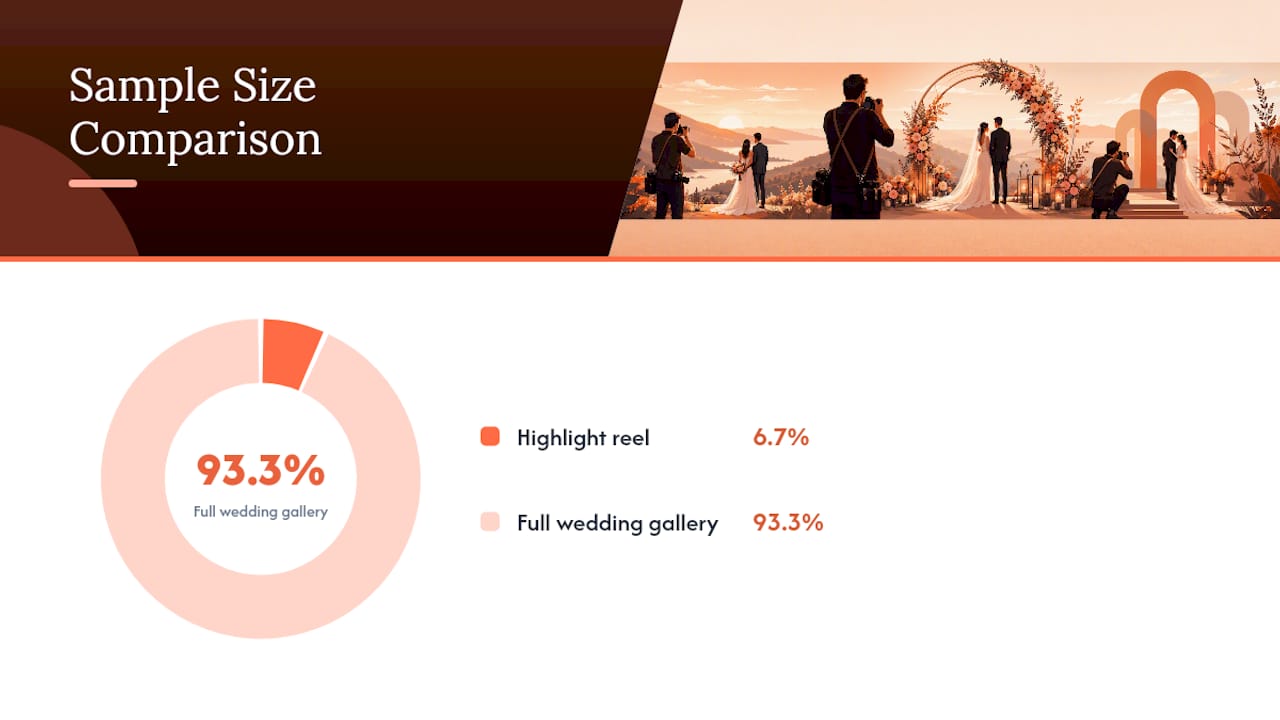
Pro Tip: Ask to see one complete wedding gallery, not just a highlight reel. Consistency across 300 unedited moments tells you more than 20 perfect portfolio shots ever will.
Deposits, Payment Schedules, and When to Book
Book 12 to 18 months ahead if you're getting married in peak season or want a specific in-demand photographer, according to Paperlust's booking timeline guidance. Waiting until 6 months out limits you to whoever still has your date open.
- Deposits typically run 25% to 50% of the total package price, due at contract signing.
- Two- or three-payment systems are the norm, with the balance due somewhere between 30 days before the wedding and the day of service.
- Get cancellation and rescheduling terms in writing before you pay a deposit. Ambiguous language here is the single most common source of disputes after the fact.
Why We Built JettLife Around Predictable Pricing
Couples don't just want good photos. They want to know what they're paying for before they sign anything. That's why JettLife structures wedding packages around clear deliverables and a 10-business-day turnaround, so storytelling doesn't come with invoice surprises.
— DJ
Ready to Get a Real Quote From JettLife
Most of the pricing ranges above come from national surveys and marketplace averages, not from a photographer who knows your venue, your guest count, or your timeline. JettLife Productions builds wedding packages around exactly those specifics, with photography and videography options for $350 an hour or combined coverage at $500 an hour through the full-service store.
What sets this company apart is a commitment to delivering edited photos and video quickly, within about 10 business days, so you're not waiting months to see your wedding day. If you're ready to move past national averages and get a number based on your actual guest count, venue, and coverage hours, start by filling out the wedding questionnaire. Bring your date, guest count, venue name, and a rough sense of which deliverables matter most to you (album, second shooter, rush editing) and you'll get a quote that actually reflects your day, not a national spreadsheet.
Sources
- The Average Wedding Photographer Cost, Explained
- A Complete Guide to Wedding Photography Prices in 2025
- Wedding Photographer Cost: What Couples Really Pay - Zola Expert Wedding Advice
- How Much Does a Wedding Photographer Cost? (2026 Guide) - Paperlust
FAQ
Is $4,000 a Lot for a Wedding Photographer?
No, $4,000 sits right in the middle of typical U.S. spending, between The Knot's $3,000 national average and Zola's higher marketplace average near $4,400. It's a reasonable mid-range to premium budget in most markets, especially if it includes a second shooter or an album.
Is $5,000 Too Much for a Wedding Photographer?
Not necessarily. $5,000 lands in the premium tier and is common in high-cost metros or for photographers with extensive experience and full-day, multi-location coverage. Whether it's "too much" depends more on what's included, deliverables, second shooter, album, than on the number itself.
What Is the 20-60-20 Rule in Photography?
This isn't a standard wedding budgeting rule with consistent industry backing, so definitions vary depending on the source. If you've seen it referenced elsewhere, ask the specific photographer or vendor what they mean by it rather than assuming a universal standard.