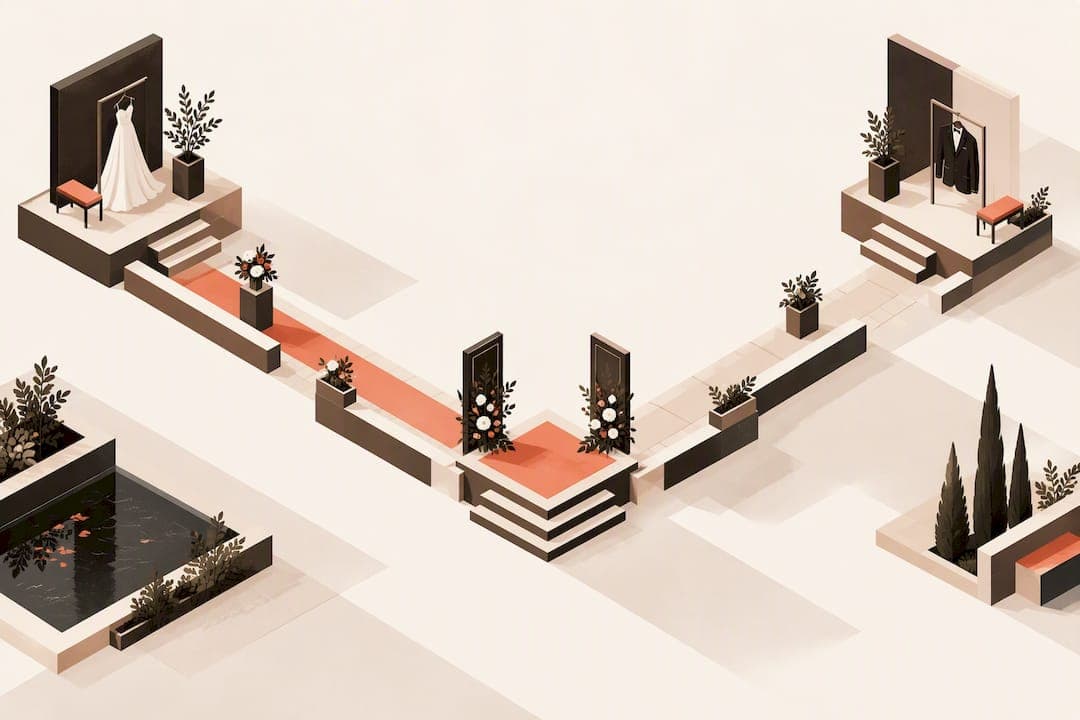
A first look is a private, pre-ceremony moment when a couple sees each other for the first time on their wedding day, captured by a photographer before guests arrive. It tends to calm nerves and frees up more time for portraits later, but it does mean trading the traditional aisle reveal for an earlier, more deliberate schedule. The right choice depends on what kind of moment you want witnessed and when.
TL;DR:
- A first look offers couples a private, intimate moment to calm nerves and capture genuine reactions, but may alter the emotional flow of the day.
- Scheduling depends on the ceremony time, with an early afternoon for afternoon weddings and early morning for sunrise photos, lasting between 5 and 30 minutes.
- The best location for privacy is a quiet, softly lit spot away from foot traffic, with an indoor backup plan in case of bad weather.
- Photographers should prompt couples gently, focusing on natural reactions, with a shot sequence starting with wide establishing shots followed by close candid captures.
- Keeping the attendee list small and confirming shot details in advance helps maintain authenticity and avoid delays during the first look.
Table of Contents
- What is a first look and what are the trade-offs?
- How do you schedule a first look without wrecking the timeline?
- Where should you hold the first look for privacy and authenticity?
- How does a photographer direct a first look so it feels real?
- What logistics does a photographer need to confirm beforehand?
- How JettLife approaches first look coverage
- What challenges come up during a first look and how are they handled?
- Creative ways to make your first look your own
- A note on balancing tradition and candid storytelling
- Book your first look coverage with JettLife
- Sources
- FAQ
What is a first look and what are the trade-offs?
A first look is simply a scheduled, photographed moment where partners see each other before the ceremony, away from guests. Couples usually pick one of a few variants: just the two of them, the couple plus wedding party, or a version that includes private vows or gift exchanges before the ceremony begins.
The appeal is practical as much as emotional. Seeing each other privately can settle nerves, guarantees an intimate reaction shot even if the ceremony gets rushed, and opens up the schedule for portraits and family photos earlier in the day. The Knot reports that first looks have become common, with many couples in a recent sample choosing to do one.
That said, a first look changes the emotional architecture of the day. Some couples feel it takes away from the drama of walking down the aisle, and if it is poorly planned, it can feel staged rather than spontaneous.
- Benefit: more relaxed couple, guaranteed candid reaction, extra time for portraits.
- Trade-off: shifts or replaces the traditional aisle reveal and requires an earlier start.
- Watch for: hair and makeup may need a touch-up right after, especially if there are tears.
How do you schedule a first look without wrecking the timeline?
Timing depends on your ceremony start time and how elaborate you want the moment to be. The Knot notes that a first look can run anywhere from a few minutes to 30 minutes or more, depending on whether it includes private vows or an extended portrait session.
- Afternoon ceremony (4:00 PM start): plan the first look around 1:30 PM, followed by couple and wedding party portraits, leaving buffer before guests arrive.
- Evening ceremony (6:00 PM start): aim for a first look near 3:30 PM to take advantage of softer late-afternoon light for portraits.
- Morning ceremony (10:00 AM start): schedule the first look at first light, around 7:30 AM, which also suits couples chasing sunrise photos.
A quick, couple-only first look with minimal posing can wrap in 5 to 10 minutes. Add private vows, a gift exchange, or wedding party reveals, and you are closer to 30 minutes or more. Build in a short buffer afterward for a beauty team to touch up mascara or smooth hair before the next round of photos.
Where should you hold the first look for privacy and authenticity?
Location shapes both the light and the level of privacy you get. A garden path, a quiet hallway inside the venue, or a corner of the property away from guest arrival routes all work well, though each comes with trade-offs in available light and distance from the ceremony space.
Privacy is what keeps the moment genuine instead of performed for an audience. Coordinate with venue staff to keep the area clear, limit who attends to just the couple and photographer, and consider timing the reveal before other vendors or guests are on-site.
- Location tip: pick a spot with even, soft light, away from foot traffic.
- Privacy tactic: ask venue staff to hold the space for 15 to 20 minutes.
- Backup plan: have an indoor alternative ready in case of rain or wind.
Pro Tip: A photographer shooting from a distance with a long lens lets the couple forget the camera is there, which usually produces the most authentic reactions.
How does a photographer direct a first look so it feels real?
The best first look photos come from light direction, not a script. A photographer might ask one partner to face away, cue the other to approach, and then simply let the moment unfold without telling them what to say or how to react.
Short, open prompts work better than detailed instructions. Something like "take a breath, then turn around when you're ready" gives the couple room to react naturally instead of performing on cue.
- Wide shot first: establishes the setting and shows the couple's full reaction.
- Long lens follow-up: captures close, candid expressions without the couple noticing the camera.
- No repeats: avoid asking couples to redo a genuine reaction for a better angle.
Pro Tip: Let a few seconds of silence pass after the turn before saying anything. Most genuine reactions happen in that pause.
What logistics does a photographer need to confirm beforehand?
A first look runs smoothly when the shot list and attendee list are settled well before the wedding day. Confirming these details ahead of time prevents delays that can ripple into the rest of the schedule.
- Shot list order: wide establishing shot, then close reactions, then a few directed portraits, done in that sequence to save time.
- Attendees: typically just the couple and photographer, with wedding party or family members added only if agreed on in advance.
- Weather contingency: an indoor backup location decided the week of the wedding, not the morning of.
- Touch-up plan: a few minutes built in immediately after for hair, makeup, or a quick change of accessories.
Keeping the attendee list small also protects privacy. Every additional person is one more chance for the moment to feel like a performance rather than a private exchange.
How JettLife approaches first look coverage
JettLife Productions treats every first look as its own small story rather than a checklist item, paying close attention to how each couple reacts so the coverage matches their actual personalities instead of a generic template. That attentiveness to emotional cues is central to how the team works on wedding days.
Briefing your photographer well makes a real difference. A few things to share ahead of time:
- Sample images: a few photos or shots you love, so your photographer understands your visual taste.
- Non-negotiables: any moments you absolutely want captured, like a parent's reaction or a specific location.
- Completed questionnaire: JettLife's wedding questionnaire helps capture these preferences before the big day.
Edited photos and videos typically have a turnaround of about 10 business days, allowing for timely sharing of highlights after the wedding.
What challenges come up during a first look and how are they handled?
Weather is the most common disruption. Rain or high wind can force a last-minute move indoors, which is why experienced photographers scout a backup location before the day even starts.
Onlookers are another frequent issue. Family members, vendors, or curious guests wandering into the frame can break the privacy that makes a first look feel genuine, so photographers often coordinate directly with venue staff to hold the space during the scheduled window.
Timing pressure shows up when hair and makeup run long, cutting into the first look window. Building a short buffer into the schedule, rather than scheduling back-to-back with no slack, absorbs most of these delays without pushing the ceremony start time.
Emotional overwhelm can also complicate things. Some partners cry harder than expected, which is a good problem for the photos but means makeup touch-up time needs to be built in immediately after, not assumed away. Photographers who flag this ahead of time, and coordinate with a beauty team on standby, avoid scrambling later in the day.
Finally, light changes fast, especially in late afternoon. Photographers scheduling a first look an hour or more before golden hour often have a backup plan for softer, open shade if direct sun becomes harsh.

Creative ways to make your first look your own
A private courtyard or garden reveal is the most common setup, but plenty of couples personalize the moment. Some write short private notes to read to each other before turning around, adding a quieter, more intimate beat before the visual reveal.

Others incorporate a meaningful object, like a family heirloom or a small gift exchanged in the same moment. A first look near a childhood home, a favorite restaurant, or another personally significant spot can also turn the moment into part of the couple's own story rather than a generic backdrop.
Some couples extend the concept to include a parent or sibling, doing a separate, brief first look with a family member before the couple's own private moment. Others skip the traditional turn-around entirely and opt for a slow walk toward each other down a quiet path, letting the approach itself build the emotion instead of a single turn.
Weather and season can also inspire the idea: a first look under string lights at dusk, in early morning fog, or just after a light rain when the light turns soft and diffuse. The common thread across all of these variations is keeping the setting personal and the reaction unscripted.
A note on balancing tradition and candid storytelling
Couples sometimes worry a first look means giving up the classic aisle reveal, but it doesn't have to be one or the other. Some couples do a quiet private moment beforehand and still save a second, more composed reaction for the aisle. What matters most is centering your own priorities instead of following whatever the last wedding you attended did.
If you are unsure which fits your day, ask your photographer for guidance based on your ceremony style and guest list. JettLife is happy to work through timeline or style-specific questions with couples planning their own version of this moment.
— DJ
Book your first look coverage with JettLife
If you want your first look handled with care instead of squeezed into a rushed schedule, JettLife Productions offers the coverage to make that possible. The team's storytelling approach means your reactions get documented as they happen, not staged for a second take, and edited images are typically delivered within 10 business days so you can start sharing sooner.

Relevant services for couples planning a first look:
- Event Photography: dedicated wedding-day photo coverage, including first look and ceremony.
- Event Videography: video coverage for couples who want the moment captured on film as well.
- Photography and Videography: combined packages for full-day coverage.
Fill out the wedding questionnaire to share your timeline, location, and non-negotiables so your first look gets planned around what matters to you.
FAQ
Does a first look ruin the traditional aisle walk?
No, a first look doesn't have to replace the aisle reveal entirely. Many couples do a private moment beforehand and still keep a composed, emotional reaction for the walk down the aisle in front of guests.
How long does a first look usually take?
A simple, couple-only first look can take as little as 5 to 10 minutes, while one that includes private vows or extended portraits can run 30 minutes or more. The exact time depends on how much you want to include beyond the initial reaction.
Who should be present during the first look?
Most couples keep it to just themselves and the photographer to protect the privacy that makes the reaction feel genuine. Wedding party members or family can be added if agreed on ahead of time, but every extra person changes the dynamic of the moment.
Is a first look worth it if we're nervous about crying in front of everyone?
Many couples choose a first look specifically because it lets them react privately before facing a crowd. The Knot's coverage notes that photographers often find couples enter the ceremony more composed after having that moment beforehand.
What should we wear or bring to the first look?
Wear whatever you plan to wear for the ceremony, since this is typically shot in full wedding attire. It also helps to bring a small touch-up kit, since tears or wind can affect hair and makeup right before the ceremony starts.